Proudly Serving
Granger,IN & Surrounding Areas

Flexible Financing
Apply Online

Available 24/7
(574) 633-4557
Proudly Serving
Granger,IN & Surrounding Areas
Flexible Financing
Apply Online
Available 24/7
(574) 633-4557
Published May 18, 2026 - Cavinder Plumbing, Heating and Cooling - Granger, IN
Quick answer: Most water heaters tell you they're failing weeks or months before they actually flood your basement. The eight signs to watch for are rusty or brown hot water, popping or rumbling sounds, lukewarm water that runs out fast, water pooling at the base, pilot or igniter problems, error codes on tankless units, the unit's age, and rising water bills. The first three are usually repairable. The fourth means you have days, not weeks. Below is what each sign means, when it's a fix versus a replace, and how to plan for the inevitable.
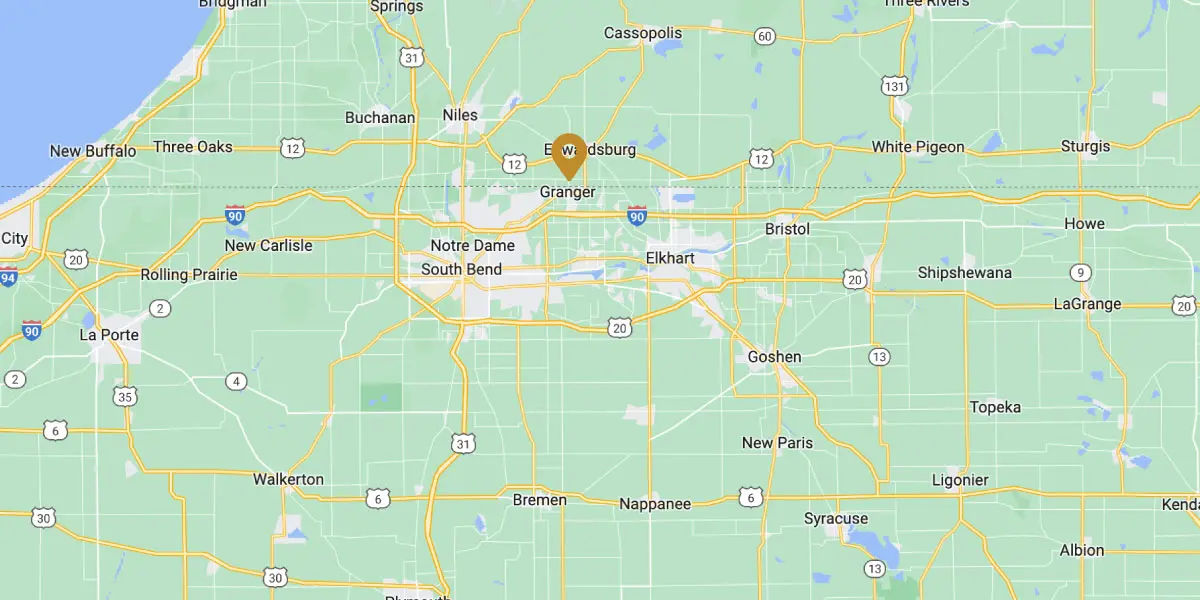
For same-day water heater service in Granger, South Bend, Mishawaka, or Elkhart, call (574) 633-4557. Cavinder installs Sure Comfort, Rheem, A.O. Smith, Bradford White, State, Rinnai, and Navien tankless across St. Joseph and Elkhart County.
Open the hot water tap only at a bathroom sink and let it run for 30 seconds. If the water comes out brown, orange, or with a metallic taste, you have rust - and on a hot-only test, that rust is almost certainly coming from inside the tank.
The anode rod inside your tank is sacrificial - it corrodes intentionally to protect the tank lining. Once the anode is fully consumed, the tank itself starts corroding from the inside out. Northern Indiana groundwater is moderately hard and accelerates anode consumption.
Sediment builds up in the bottom of your tank over the years - mostly mineral deposits from Michiana's moderately hard water. As the burner or heating element warms water trapped underneath the sediment layer, steam bubbles form and burst, making popping and rumbling sounds.
This isn't just an annoyance. Sediment insulates the tank bottom from the burner, the burner runs longer to reach setpoint, the tank metal at the bottom overheats, and the tank fails faster.
Hot water cycle that used to last a full shower now goes lukewarm halfway through? Two common causes on a tank water heater:
On a tankless water heater, "lukewarm and then cold" usually points to a flow sensor issue or scale buildup on the heat exchanger. Annual descaling on tankless units is required for warranty and dramatically extends life.
This is the sign that means "stop reading and act." Water at the base of a tank water heater is either:
If you see water at the base, do this immediately:
We carry common-size replacement Sure Comfort, Rheem, A.O. Smith, and Bradford White tanks on our trucks - in most cases we can replace same-day.
The pilot light won't stay lit, the burner won't ignite, or the burner cycles on and off without staying lit. These point to:
All four are repairable on a unit under 10 years old. If your tank is older and the gas valve fails, replacement usually wins the repair-vs-replace math.
Tankless water heaters - Rinnai, Navien, Noritz - run on circuit boards and tell you exactly what's wrong with error codes. Common Michiana-area codes we see:
Tankless units are heavily dependent on annual descaling - especially in Michiana water. Skip the descaling and you'll see escalating error codes within 3-5 years of install. The Cavinder Shield maintenance plans include annual tankless descaling.
Most water heater failures correlate with age more than any single mechanical sign. Expected service life in Northern Indiana:
Find the manufacture date on the label - it's usually encoded in the serial number. If your tank is at or past expected service life and you've started seeing any of the signs above, plan replacement now rather than after a flood. Replacing on your timeline costs less than emergency replacement after water damage.
An aging water heater loses efficiency before it loses function. Sediment insulates the tank bottom, heating elements scale over, and burners run longer for the same volume of hot water. The result is a slow climb in your utility bills that's easy to miss.
The federal 25C Energy Efficient Home Improvement Credit currently offers up to $2,000 toward qualifying heat-pump water heater installations - worth factoring into the repair-vs-replace decision.
The rough math we walk customers through:
Standard tank: 8-12 years. Tankless: 15-20 years with annual descaling. Hybrid heat-pump: 10-15 years. Michiana's moderately hard water is harder on tank-style units than coastal soft-water markets, so the lower end of those ranges is typical without regular maintenance.
Treat it as one. A leak from a fitting or T&P valve is repairable, but a leak from the tank body means the inner tank has corroded through and can rupture without warning. Shut off the cold water supply and the power, then call us. We carry common replacement tanks on our trucks and can usually replace same-day in Granger, South Bend, Mishawaka, and Elkhart.
Repairs run from low (thermocouple, element) to mid-range (gas valve, anode). Replacement varies widely with tank type, fuel, and code-upgrade requirements (expansion tank, pan, drain). When the repair cost is more than half the replacement cost on a unit over 8 years old, replacement is almost always the better long-term value. We provide written estimates before any work.
Properly maintained, yes - 15 to 20 years on a tankless versus 8 to 12 on a tank. The catch is "properly maintained" means annual descaling for hard-water markets like Michiana. Skip the descaling and a Rinnai or Navien can fail by year 8. The Cavinder Shield maintenance plans bundle the descaling.
If you're replacing with a qualifying heat-pump water heater (hybrid electric), yes - the credit can return up to $2,000 of the install cost. The credit does not apply to standard tank or standard tankless replacements. We can confirm whether the model you're considering qualifies before installation.
Call (574) 633-4557 or book online. Licensed in Indiana (CO19900013 HVAC / PC19700254 plumbing). Same-day water heater service in Granger, South Bend, Mishawaka, Elkhart, and across St. Joseph and Elkhart County. 24/7 emergency response for active leaks and flooding.

©Red Barn Media Group 2026 · About · Reviews · Privacy Policy