Proudly Serving
Granger,IN & Surrounding Areas

Flexible Financing
Apply Online

Available 24/7
(574) 633-4557
Proudly Serving
Granger,IN & Surrounding Areas
Flexible Financing
Apply Online
Available 24/7
(574) 633-4557
Published May 4, 2026 - Cavinder Plumbing, Heating and Cooling - Granger, IN
Quick answer: An AC blowing warm air is usually one of seven things - a thermostat set to heat or fan-only, a tripped breaker, a clogged filter, a dirty or unpowered outdoor unit, ice on the indoor coil, low refrigerant from a leak, or a backed-up condensate drain that tripped the safety float. Work through the checks below in order. Five of them you can confirm yourself in under ten minutes.
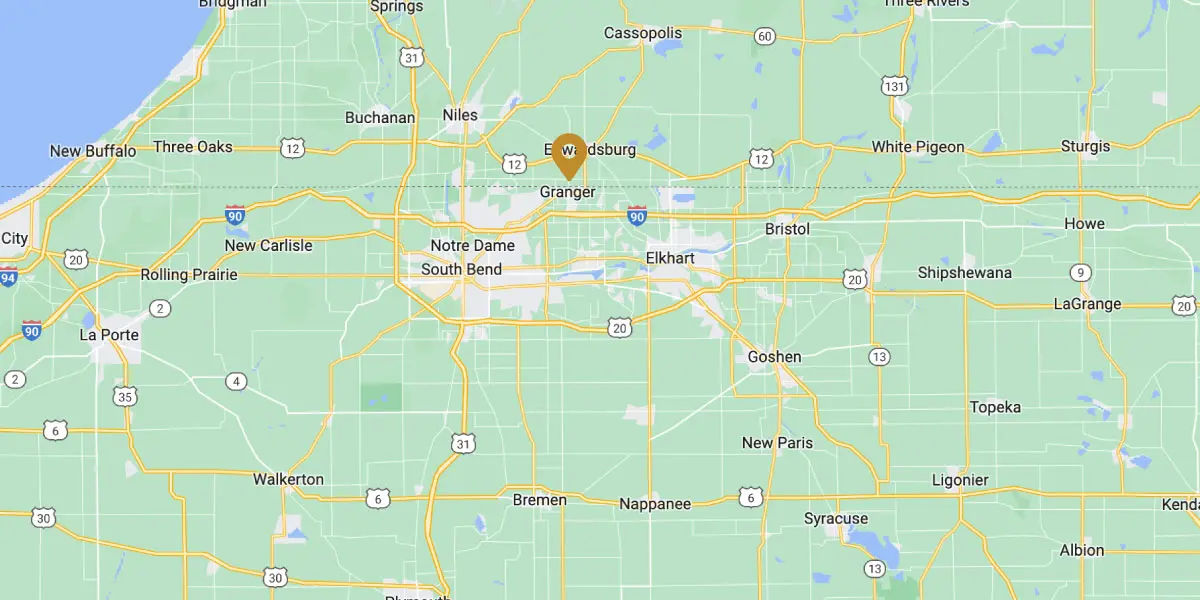
If none of the seven gets you cold air back, call (574) 633-4557 for same-day AC repair in Granger, South Bend, Mishawaka, Elkhart, and across St. Joseph and Elkhart County.
The most common "AC blowing warm air" call we get in early summer turns out to be a thermostat set to HEAT or FAN ONLY. Both modes will move air through your supply registers, but neither runs the compressor that actually cools it.
If you have a smart thermostat (Nest, ecobee, Honeywell T9), pull up the schedule and confirm a cooling setpoint is active for the current time block.
Your AC has two breakers: one for the indoor air handler/furnace and one for the outdoor condenser. If the outdoor breaker tripped, your blower will keep moving room-temperature air across an inactive coil while you stand inside wondering why nothing's getting cold.
The outdoor disconnect box on the wall next to the condenser also has a pull-out that occasionally gets bumped loose by landscapers or yard work.
A clogged filter restricts return airflow. The evaporator coil downstream gets so cold it freezes over, then the system blows warm air past the ice block. The longer you run it that way, the more damage the compressor takes.
The outdoor condenser needs free airflow to dump heat. Cottonwood season in Granger and Mishawaka coats coils in white fluff. Mulch, leaves, and grass clippings pile up against the cabinet. A blocked condenser can't reject heat, so your indoor air doesn't get cold.
The dual run capacitor is the single most common summer failure we see in St. Joseph County. They typically last 5-10 years and fail without warning, leaving the outdoor fan and compressor unable to start.
A frozen evaporator coil is the most common cause of "blowing warm air" once the easy checks above are ruled out. The coil ices over from low refrigerant, restricted airflow, or a stuck blower. The ice block insulates the coil from air passing across it, so the system runs but no cold air reaches the rooms.
For a full walkthrough on freeze-ups, see our companion post: AC freezing up: causes and fixes.
Air conditioners don't burn refrigerant. If yours is low, the refrigerant escaped through a leak somewhere - usually at a brazed joint, the evaporator coil, the outdoor coil, or a service valve. Low charge makes the coil run colder than it should, ices up, and (eventually) makes warm air at the supply registers.
Your evaporator coil produces water as it dehumidifies the air. That water runs into a drain pan and out through a 3/4-inch PVC line. The line typically routes to a floor drain, condensate pump, or outside through the wall. A safety float switch shuts the whole system off when the pan or line backs up to prevent flooding.
If the system runs but blows warm air specifically, the float is probably not your issue - keep moving down the list. If the system won't start at all on a hot day, the float is a strong suspect.
If you've worked through all seven checks and the system still blows warm air, the problem is one we need to diagnose with instruments:
Cavinder runs 24/7 emergency AC service across Granger, South Bend, Mishawaka, and Elkhart. Same-day diagnostic on any of the above. Licensed in Indiana (CO19900013 HVAC).
Run through the seven checks above first - the thermostat, breaker, and filter checks take five minutes total and resolve a meaningful share of warm-air calls. If the easy fixes don't restore cold air within 30 minutes, call. Running an AC that's already low on refrigerant or iced up causes more damage the longer you let it run.
No. If the supply-minus-return temperature split is under about 16°F, the system is fighting something - low charge, ice forming, airflow restriction. Continued operation in that state often turns a small fix into a compressor replacement. Turn it off, work through the checks, and call us if you can't restore the cooling.
Classic ice cycle. The coil cools enough to freeze, then the ice insulates it and the system blows warm. After the thermostat shuts off and the coil thaws, the cycle repeats. Underlying cause is almost always low refrigerant or a dirty filter restricting airflow.
No, for two reasons. First, Indiana requires EPA Section 608 certification to handle HFC refrigerants - DIY kits are illegal for residential AC and the certified contractor who eventually fixes the leak has to recover whatever you put in. Second, "topping off" without leak-finding just delays the real repair and damages the compressor over time.
Most weekdays in cooling season we can dispatch same-day for Granger, South Bend, Mishawaka, and Elkhart calls received before 2 PM. We run 24/7 emergency service for true no-cooling situations - call (574) 633-4557 any time.
Call (574) 633-4557 or book online. Licensed in Indiana (CO19900013 HVAC / PC19700254 plumbing). Same-day service available in Granger, South Bend, Mishawaka, Elkhart, and across St. Joseph and Elkhart County.

©Red Barn Media Group 2026 · About · Reviews · Privacy Policy