Proudly Serving
Granger,IN & Surrounding Areas

Flexible Financing
Apply Online

Available 24/7
(574) 633-4557
Proudly Serving
Granger,IN & Surrounding Areas
Flexible Financing
Apply Online
Available 24/7
(574) 633-4557
Published May 11, 2026 - Cavinder Plumbing, Heating and Cooling - Granger, IN
Quick answer: An AC freezes up when the evaporator coil drops below 32°F and the moisture pulled from indoor air condenses, freezes, and builds into a block of ice. Four causes drive almost every freeze-up we see in Michiana: a dirty air filter, blocked airflow, low refrigerant from a leak, or running the AC at outdoor temperatures below about 60°F. The fix in every case starts with turning the system off, letting the ice thaw, and then addressing the root cause - never chipping ice off the coil.
If your indoor coil or the copper suction line going outside has white frost or solid ice on it, turn the thermostat to OFF and the fan to ON for 2-4 hours, then call (574) 633-4557 if it freezes again.
Northern Indiana hits 65-75% relative humidity for most of June through August. The evaporator coil in your air handler is doing two jobs at once on those days: cooling the air and pulling water out of it. The wetter the air, the harder the coil works, and the more vulnerable it is to dropping below freezing and locking itself up with ice.
We see freeze-up calls every cooling season in Granger, South Bend, Mishawaka, and Elkhart - especially during the muggy July stretch when window units in older homes can't keep up and central AC systems run almost continuously. The good news is that almost every freeze-up traces back to one of four root causes, and three of them are fixable without a service call.
This is the most common cause we find on freeze-up service calls. A dirty filter starves the evaporator coil of warm return air. Without enough air moving across it to absorb heat, the coil's temperature drops below 32°F. The moisture in the air going past it condenses and freezes. Once ice forms, airflow gets even worse - now the ice is the blockage - and the whole coil glazes over.
Fix:
Even with a clean filter, your AC needs unblocked supply registers and clear return grilles. We see this in finished basements where homeowners closed the supply vents thinking it would push more air upstairs (it doesn't), in bedrooms where furniture got moved over a return grille, and in laundry rooms where the dryer was vented into the same space as a return.
Fix:
Refrigerant is the substance that absorbs heat at the indoor coil and rejects it at the outdoor unit. When the system is low on refrigerant, the pressure inside the coil drops, which drops the boiling temperature of the refrigerant, which drops the coil temperature below freezing. AC systems don't consume refrigerant - if yours is low, it leaked out somewhere.
Common leak sites in Michiana systems: brazed joints at the evaporator coil, the outdoor coil itself (often pitted by corrosive lawn chemicals or salt from sidewalk de-icer over years), and at service ports where Schrader valve cores have aged out.
Fix:
Cool spring evenings and cool overnight stretches in Michiana - especially the May and September shoulder seasons - can trick people into running the AC when the outdoor temperature is below about 60°F. The system isn't designed for that. The pressure differential in the refrigerant cycle drops below normal, and the coil ices up.
Fix:
If you've worked through the four big causes above and freeze-ups continue, the problem is usually one of these:
If your coil or refrigerant line is iced up right now, do these in order:
Do not chip ice off the coil with anything. The aluminum fins bend at the lightest pressure, and a puncture in the copper means a refrigerant leak you didn't have before.
Call if any of these match your situation:
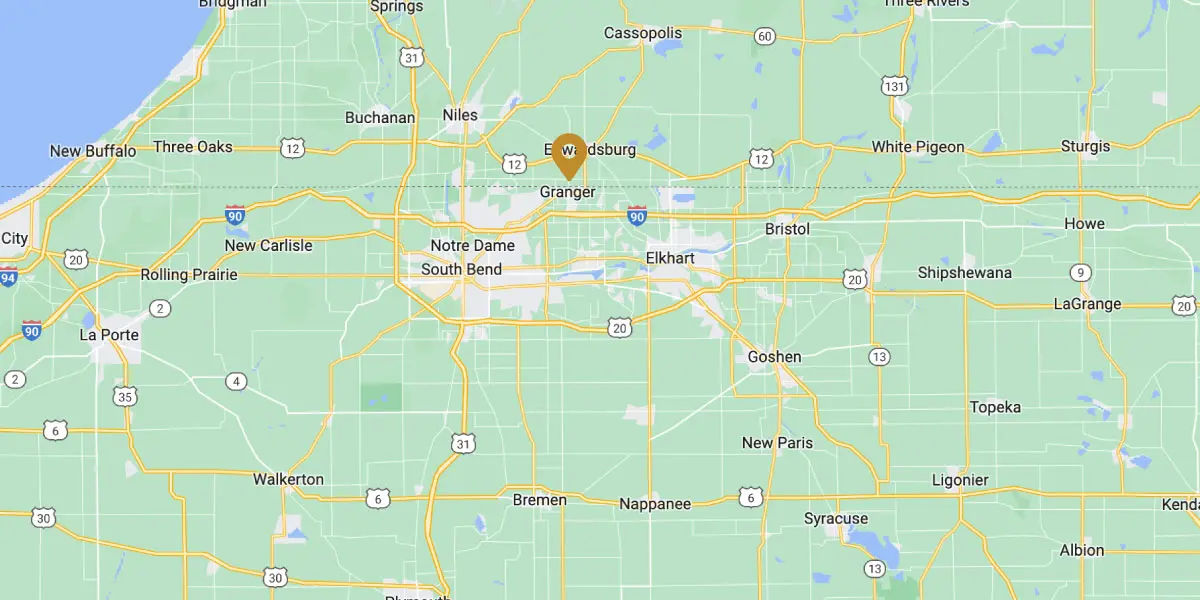
Cavinder runs 24/7 emergency AC service across Granger, South Bend, Mishawaka, and Elkhart, plus the rest of St. Joseph and Elkhart County. Licensed in Indiana (CO19900013 HVAC).
2-4 hours with the fan running on a fully iced coil. A light frost can clear in under an hour. Don't rush it with a hair dryer or space heater - direct heat can warp the coil fins and you'll trade one problem for a worse one.
Yes. The compressor is designed to pump refrigerant in gas form. When the coil is frozen, liquid refrigerant can return to the compressor and "slug" it - the compressor tries to compress an incompressible liquid and damages its internal valves. Each slugging event shortens the compressor's life. Turn the AC off as soon as you spot ice.
Lower outdoor temperatures at night drop the system's operating pressure, which drops the coil temperature toward freezing. Combined with continued humidity in the house, you get nighttime freeze-ups that don't happen during the warmer daytime. Often the fix is to set a higher overnight setpoint or run a whole-home dehumidifier separately.
Often, yes. Closing supply registers raises static pressure across the blower and reduces airflow across the evaporator coil. Reduced airflow drops coil temperature toward freezing. Modern residential systems are designed assuming all registers are open. If you want to reduce conditioning in certain rooms, look at zoning dampers controlled by the thermostat, not by hand-closing vents.
Cost depends on the cause. Filter swap is free. Coil cleaning is a moderate service charge. Leak repair + refrigerant recharge typically runs into the hundreds depending on the leak location and refrigerant type. Compressor replacement is the most expensive outcome and is usually where the repair-vs-replace conversation begins. We provide a written estimate before any repair work.
If your AC is running but blowing warm air without obvious ice, walk through our companion checklist: Why is my AC blowing warm air? 7 things to check. For full-system prevention, our spring AC tune-up post walks through what we check in an annual maintenance visit.
Call (574) 633-4557 or book online. Licensed in Indiana (CO19900013 HVAC / PC19700254 plumbing). 24/7 emergency service in Granger, South Bend, Mishawaka, Elkhart, and across St. Joseph and Elkhart County.

©Red Barn Media Group 2026 · About · Reviews · Privacy Policy