Proudly Serving
Granger,IN & Surrounding Areas

Flexible Financing
Apply Online

Available 24/7
(574) 633-4557
Proudly Serving
Granger,IN & Surrounding Areas
Flexible Financing
Apply Online
Available 24/7
(574) 633-4557
Published June 27, 2026 - Cavinder Plumbing, Heating and Cooling - Granger, IN
Quick answer: If your water heater is leaking, do two things first: shut off the cold water supply valve above the unit, and shut off the power - turn a gas unit's control to "off," or flip the breaker on an electric unit. Then find where the water is coming from. Leaks at the temperature and pressure (T&P) valve, the drain valve, or the cold and hot fittings are usually repairable. A leak from the tank body itself means the tank has corroded through and needs replacement. Below is the step-by-step shut-off, how to find the source, and which leaks you can fix versus which mean a new water heater.
For same-day water heater service in Granger, South Bend, Mishawaka, or Elkhart, call (574) 633-4557. We carry common replacement tanks and handle active leaks 24/7.
Stopping the water and power limits the damage and makes it safe to inspect. Do this first, in order:
Once the water and power are off, dry the area and watch where water reappears. Common sources, from most to least repairable:
A quick way to narrow it down: dry everything, lay down paper towels, and check which spot gets wet first. Top-of-tank usually means a fitting; the T&P discharge tube means that valve; water emerging from underneath the tank usually means the tank body.
Where the leak comes from largely decides whether you're looking at a repair or a new water heater.
Age factors in too. On a tank water heater past its expected service life (commonly 8 to 12 years in Northern Indiana), even a repairable leak is often a sign the unit is near the end, and it may make more sense to replace than to keep fixing. If you're seeing multiple warning signs, our post on signs your water heater is about to fail walks through the full list and a repair-versus-replace framework.
It can be, which is why shutting it down is the right first move. The main risks:
A small drip isn't an immediate emergency the way a burst tank is, but it won't fix itself, and it's telling you the unit needs attention.
You can't make a water heater last forever, but you can get the most out of it and avoid surprise leaks:
When it is time to replace, see our tank water heater installation and tankless water heater installation pages. We install Sure Comfort, Rheem, A.O. Smith, Bradford White, State, Rinnai, and Navien.
Yes. Shut off the cold water supply valve at the top of the tank (or the home's main if you can't reach it), then shut off the power - turn a gas unit's control to off, or flip the breaker on an electric unit. This limits water damage and makes it safe to inspect. Then find the leak source and call for service.
It depends on where it's leaking. A leak at the T&P valve, the drain valve, or a cold or hot fitting is usually repairable. A leak from the tank body itself means the inner tank has corroded through and is not repairable - that requires replacement. We diagnose the source and give you the options before any work.
A tank-body rupture is an emergency - 40 to 80 gallons can flood a space and the supply keeps feeding it. A small drip from a valve or fitting is not immediately catastrophic but still needs attention and won't fix itself. Either way, shut off the water and power first. We offer 24/7 emergency service for active leaks in Granger, South Bend, Mishawaka, and Elkhart.
It may be condensation rather than a leak, especially on a gas unit when cold incoming water meets a warm tank or early in the heating season - that usually clears as the tank reaches temperature. It could also be a slow drip from the T&P discharge tube or a fitting that only weeps under pressure. Dry everything, lay down paper towels, and watch which spot gets wet first.
A standard tank water heater commonly lasts 8 to 12 years in Northern Indiana, and tank-body leaks tend to show up toward the end of that range as the steel corrodes through. Tankless units last longer (15 to 20 years with annual descaling) and have no standing tank to leak. Annual flushing and anode-rod checks help a tank reach the upper end of its lifespan.
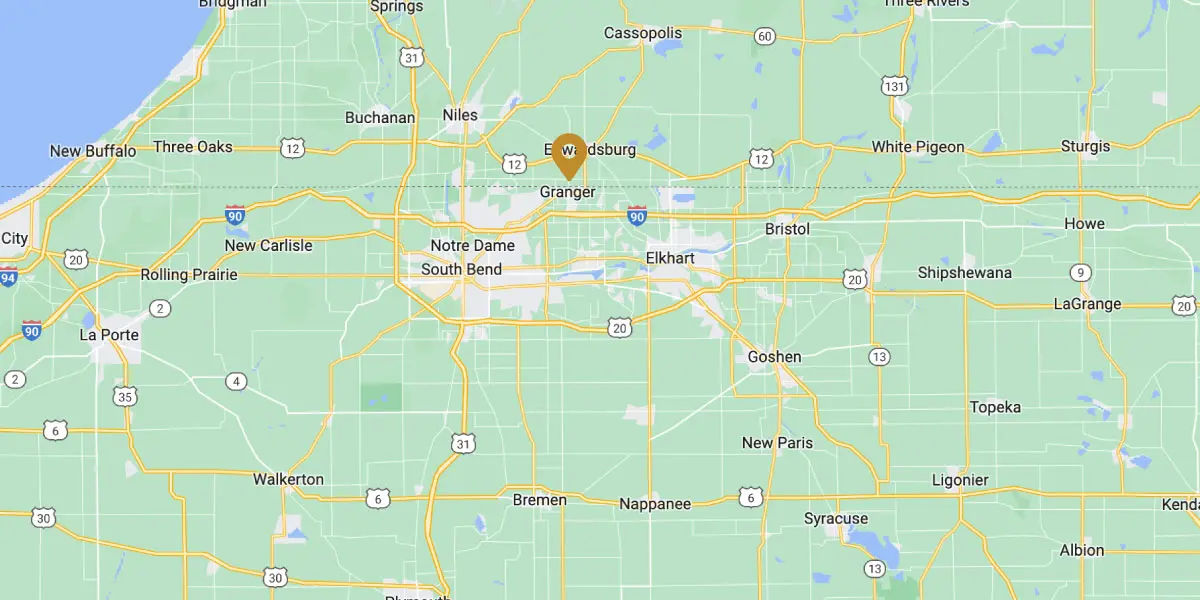
Call (574) 633-4557 or book online. Licensed in Indiana (CO19900013 HVAC / PC19700254 plumbing). Same-day water heater repair and replacement in Granger, South Bend, Mishawaka, Elkhart, and across St. Joseph and Elkhart County. 24/7 emergency response for active leaks and flooding.

©Red Barn Media Group 2026 · About · Reviews · Privacy Policy