Proudly Serving
Granger,IN & Surrounding Areas

Flexible Financing
Apply Online

Available 24/7
(574) 633-4557
Proudly Serving
Granger,IN & Surrounding Areas
Flexible Financing
Apply Online
Available 24/7
(574) 633-4557
Published August 28, 2026 - Cavinder Plumbing, Heating and Cooling - Granger, IN
Quick answer: When the power goes out in a Michiana home, the furnace stops, the sump pump stops, and if you are on a well, the water stops too. Most of the damage from an outage is not the outage itself; it is a flooded basement or a frozen pipe that happened because nobody had planned for those three things. Twenty minutes of preparation before the next storm covers most of it. If you are already in an outage and water is rising or pipes are at risk, call Cavinder at (574) 633-4557.
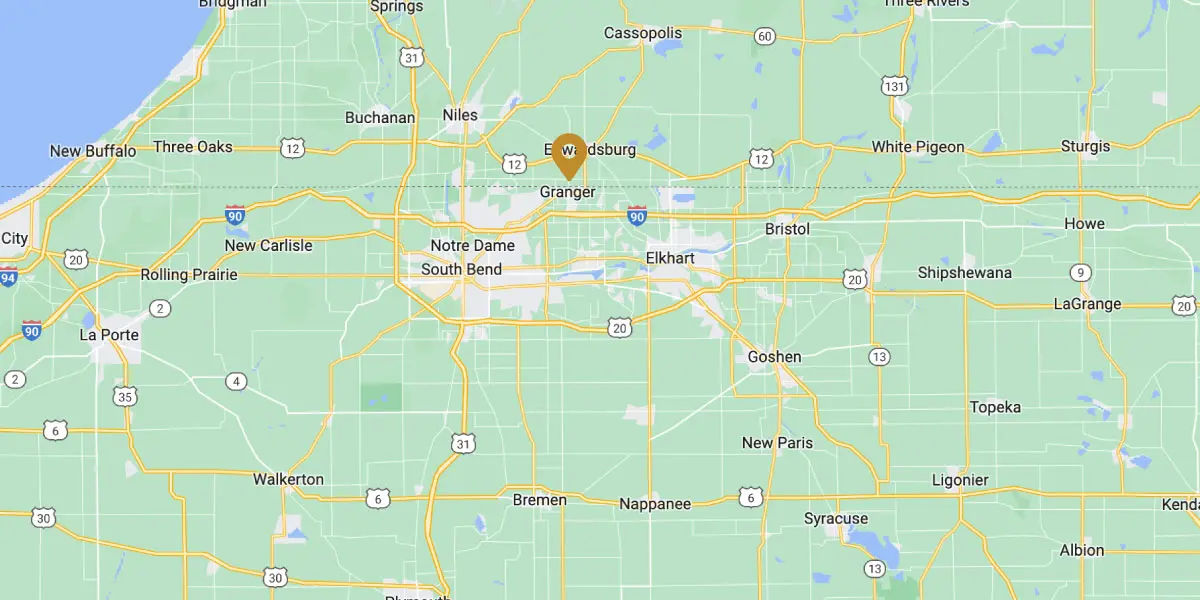
Most outage checklists online are written for nowhere in particular. This one is written for homes in Granger, South Bend, Mishawaka, Elkhart, and the surrounding townships, where the housing stock is old, a lot of homes are on private wells, and the storms that knock out power are the same storms that fill the sump pit.
Often enough to plan for. On November 5, 2025, a tree took down high-voltage lines feeding several substations, and Indiana Michigan Power reported roughly 9,000 customers without power in St. Joseph County, most of them north of South Bend and Mishawaka and in the Granger area. Mishawaka Utilities separately restored about 3,800 customers around University Park later that evening. That is a routine-weather weekday in November, not an ice storm, and it hit the exact neighborhoods Cavinder serves most.
The other local wrinkle is that this area has several electric utilities, which matters when you are trying to find out what is going on. Depending on your address, your electricity comes from Indiana Michigan Power, Mishawaka Utilities (the city's own municipal system), NIPSCO, or, across the line in southwest Michigan, Midwest Energy & Communications. NIPSCO is the natural gas provider throughout. The outage map you need is your own utility's, and the utility across the road may not be yours. Find out which one bills you before the next storm, not during it.
No. This is the most common misconception we hear, and it catches people every winter. A modern gas furnace burns gas, but everything that controls the burn runs on electricity: the control board, the inducer motor that proves draft before the burners are allowed to light, the hot-surface ignitor, the safety switches, and the blower that moves the heat into the house. Kill the power and the furnace is a metal box. The same is true of heat pumps, mini-splits, and gas boilers with electronic ignition and circulator pumps.
What this means in practice: a winter outage is a heat outage, and the clock on the house cooling down starts the moment the lights go out. How fast it drops depends on the outdoor temperature, wind, and how well the house is insulated. A tight newer home in the 20s might lose a degree or two an hour at first; an older home with original windows on a single-digit night loses it much faster.
It stops, and this is the one that costs real money. The storms that knock out power are the storms that put the most water in the ground, so the pit fills fastest at exactly the moment the pump cannot run. A basement that has never had water can take on inches of it in a single outage.
There are two backup options, and they are not interchangeable. A battery backup sump pump runs a secondary pump off a deep-cycle battery and typically gives 8 to 12 hours of continuous pumping. A water-powered backup uses municipal water pressure to pull water out of the pit, with no battery to maintain, but it only works on a pressurized city water supply. It is not an option for well-water homes. Our sump pump guide covers how to test your pump in 30 seconds, when to replace it, and how to choose a backup, so we will not repeat it here. The one thing to add for outage planning: a battery backup only helps if the battery is charged and under about three years old. Check it now.
Yes, almost immediately. The well pump is electric, and once the pressure tank runs down you have no water: no faucets, no showers, and no toilet flushes after the tanks are used. This is invisible to city-water households, and it is why generic outage checklists do not mention it, but a large share of the homes in Granger and the rural townships around it are on private wells.
What to do about it:
Not in the first hour. Possibly by the next morning. Water in a pipe does not freeze until the air around it is below 32 degrees for long enough to pull the heat out, so the question is which parts of your house get there first. In the older Michiana housing stock, that means supply lines on exterior walls, anything running through an unheated crawlspace, garage, or attic, kitchen and bathroom lines under sinks on outside walls, and pipes in additions that were never insulated to the standard of the main house.
During an outage:
Know where the main shutoff is before you need it. In most local homes it is where the water line enters the basement or crawlspace, often near the water meter or the pressure tank. If you have never turned it, turn it once now to make sure it moves. Our winterizing post covers the outside-wall pipes and the six other spots to check before the first freeze.
It stops too. A tankless water heater fires on demand using an electronic controller, an ignition system, and a fan, and none of that runs without power. This surprises a lot of owners, because a conventional gas tank heater with a standing pilot keeps heating water through an outage, and people assume the upgrade behaves the same way. It does not, and neither does a power-vented tank heater, which needs electricity for its exhaust fan.
If hot water during an outage matters to you, a tankless unit belongs on the generator circuit. Its electrical draw is small; it is the well pump and the furnace that decide the generator size. More on tankless units and how they are installed on our tankless water heater page.
A portable generator is the affordable option. You start it, run heavy-duty cords to a few loads, and refuel it every several hours. It will run a refrigerator, a battery charger, and a space heater. It will not run your furnace or well pump unless a licensed electrician has installed a manual transfer switch or interlock at the panel.
A standby generator is permanently installed, runs on natural gas or propane, and starts itself through an automatic transfer switch when the utility drops. It can carry the furnace, the well pump, the sump pump, and a tankless water heater together, which is the combination that protects a Michiana home. It costs considerably more and needs annual maintenance to be trusted in a storm, which is what Cavinder's Power Shield add-on covers.
Two rules that are not optional, whichever type you own:
FEMA's Ready.gov power outage page covers the food, medication, and communication side of an outage. This list covers the parts of the house that Cavinder services, which are the parts that cause the expensive damage.
Restoration is not the end of the event. Several systems in the house will not restart on their own, or will restart wrong:
If water is rising in the sump pit and the pump will not run, if a pipe has burst, if the furnace will not restart after the checks above, or if you smell gas or a CO detector sounds, that is not a wait-until-morning situation. Cavinder runs 24/7 emergency dispatch for HVAC and plumbing from three Michiana offices, with flat-rate pricing and no overtime markup. For everything else, a battery backup install, a well pump check, a generator maintenance plan, or the furnace tune-up that makes the winter outage a smaller problem in the first place, schedule a regular visit.
No. The control board, inducer motor, ignitor, safety switches, and blower all require electricity, so a gas furnace shuts down the moment the power does. A generator with a properly installed transfer switch is the only way to keep a furnace running through an outage.
It depends on the outdoor temperature and how quickly the house cools. Pipes on exterior walls and in unheated spaces are the first at risk, and on a sub-zero night that can be within several hours. If the indoor temperature is heading below 40 degrees and power is still out, shut off the main water valve and drain the lines from the lowest faucet.
Yes, that is what it is for. A battery backup runs a secondary pump off a deep-cycle battery and typically provides 8 to 12 hours of continuous pumping. It only works if the battery is charged and in good condition, so test it before storm season and replace batteries older than about three years.
Yes. The well pump is electric, and once the pressure tank runs down there is no water for faucets, showers, or flushing. Store drinking water before a forecast storm, fill a bathtub for flushing, and if you are buying a generator, size it to carry the well pump.
No. Backfeeding through an outlet energizes the utility lines outside your home, can electrocute line crews, and violates electrical code. The only safe way to connect a generator to your panel is a transfer switch or interlock installed by a licensed electrician. Portable generators must also run outdoors, away from windows and doors, because their exhaust contains carbon monoxide.
Call (574) 633-4557 or book online. Licensed Indiana HVAC (CO19900013) and plumbing (PC19700254) contractor serving Granger, South Bend, Mishawaka, Elkhart, and across St. Joseph and Elkhart County and southwest Michigan.

©Red Barn Media Group 2026 · About · Reviews · Privacy Policy